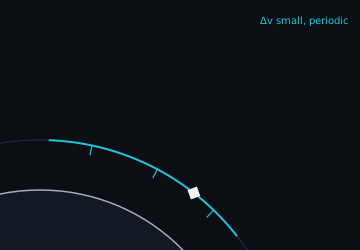
Station-keeping
Hold the orbit your mission needs, for as long as it needs it.
Small, periodic burns that cancel atmospheric drag and keep the orbit where the mission planned it.
Propulsion
Non-toxic propulsion for small satellites, developed around three manoeuvres. Every product below carries its development status, and every figure carries target or measured. Where a number is not yet validated, it is not published.
Product
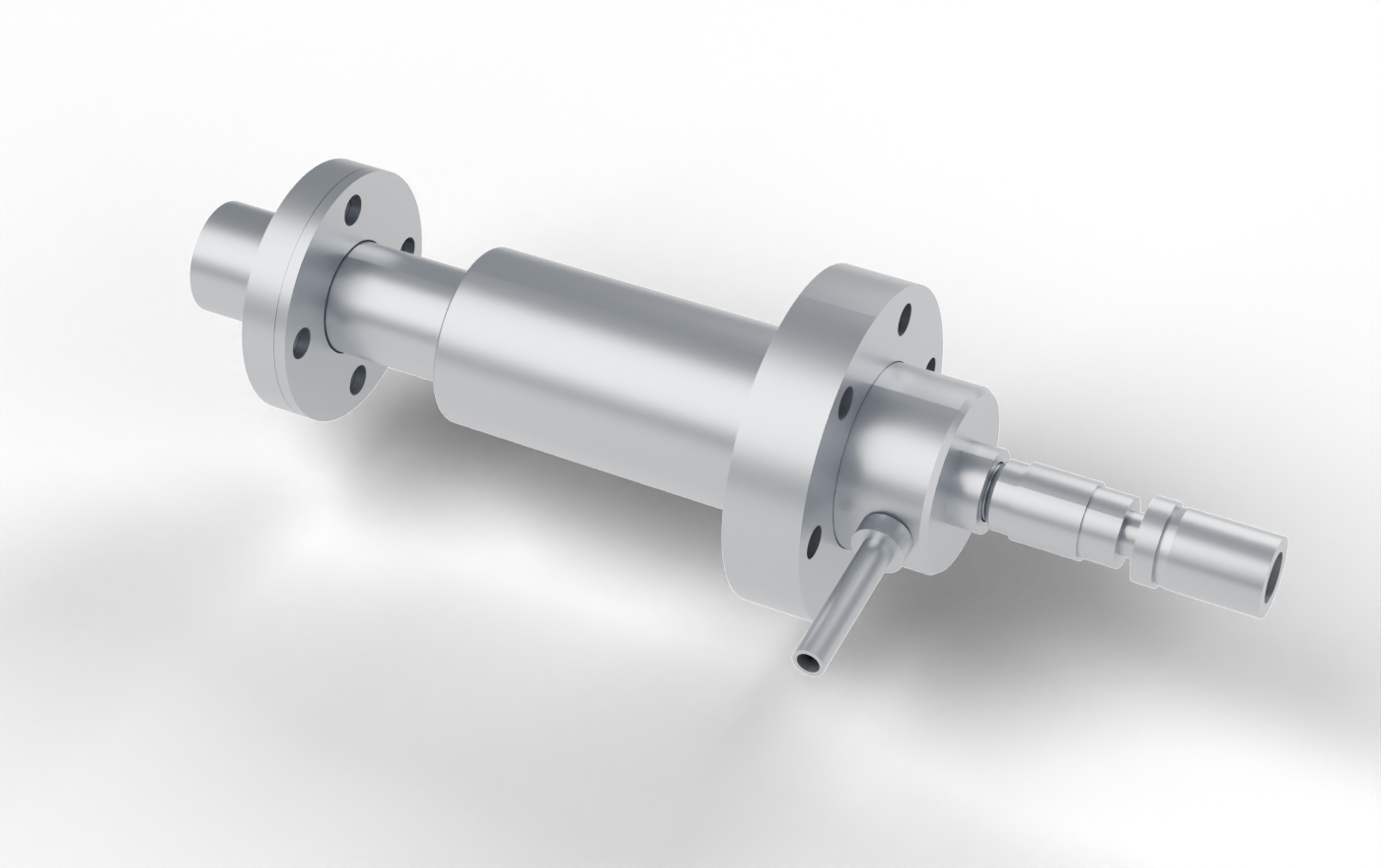
Thruster.STEP · Cycles · studio light · 3q
| Parameter | Value | Basis |
|---|---|---|
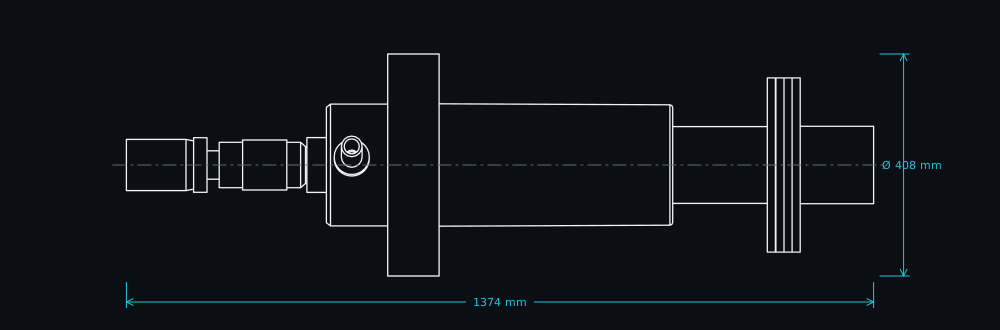
| Overall length | 1374 mm | CAD |
| Max. diameter | Ø 408 mm | CAD |
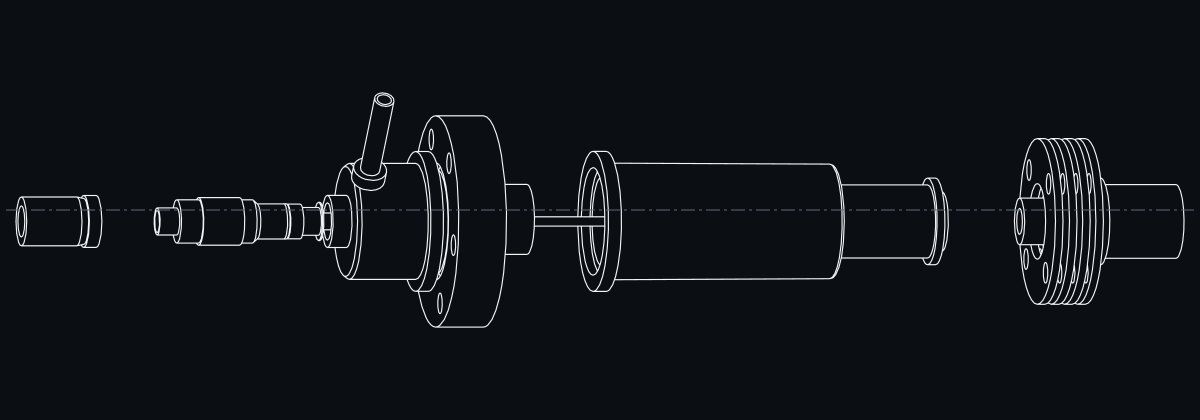
| Parts | 24 | CAD |
| Thrust | — N | target |
| Specific impulse | — s | target |
| Chamber pressure | — bar | target |
Values shown as "—" are pending validation by the engineering team and are not published.
Drawings
Every figure is projected from the delivered STEP file by hidden-line removal. Same geometry as the renders, in drawing-office form.
Applications
Hold the orbit your mission needs, for as long as it needs it.
Small, periodic burns that cancel atmospheric drag and keep the orbit where the mission planned it.
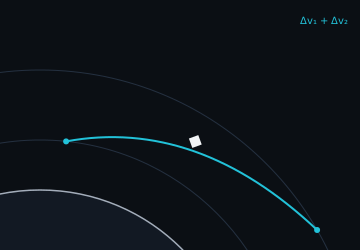
Move between orbits after deployment, up or down.
Two burns: one to leave the injection orbit, one to circularise at the target.
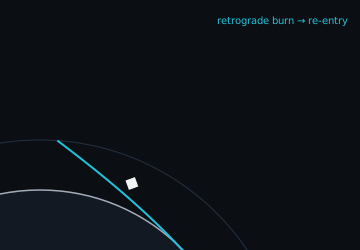
Bring the satellite down at end of life and leave nothing behind.
A retrograde burn that lowers the perigee until re-entry, within the 5-year rule.
Next step
Orbit, spacecraft mass, available power and the Δv you need. We size against it and come back with what fits and what does not.
Request a proposal →